,quality(70)/https%3A%2F%2Fcms.tracker.gg%2Fcontent%2Fimages%2F2026%2F06%2FHLWEYGrWcAAnplz--1-.jpg/image.jpg)
,quality(70)/https%3A%2F%2Fcms.tracker.gg%2Fcontent%2Fimages%2F2026%2F06%2FMaps.jpg/image.jpg)
,quality(70)/https%3A%2F%2Fcms.tracker.gg%2Fcontent%2Fimages%2F2026%2F06%2FHLban5yWcAAUihk.jpg/image.jpg)
,quality(70)/https%3A%2F%2Fcms.tracker.gg%2Fcontent%2Fimages%2F2026%2F06%2Fdff731d25c880d9910a192a105fcc45e038b8d5b-1920x1080.jpg/image.jpg)
,quality(70)/https%3A%2F%2Fcms.tracker.gg%2Fcontent%2Fimages%2F2026%2F06%2FHLVwwmhWMAAOOcX.jpg/image.jpg)
,quality(70)/https%3A%2F%2Fcms.tracker.gg%2Fcontent%2Fimages%2F2026%2F06%2FHLVupbGXkAAot2_.jpg/image.jpg)
,quality(70)/https%3A%2F%2Fcms.tracker.gg%2Fcontent%2Fimages%2F2026%2F06%2Fe83685974edceceef3fd8e0413dac95762816804-1920x1080.jpg/image.jpg)
,quality(70)/https%3A%2F%2Fcms.tracker.gg%2Fcontent%2Fimages%2F2026%2F06%2FHKBQQI6WQAAMa0a.jpg/image.jpg)
,quality(70)/https%3A%2F%2Fcms.tracker.gg%2Fcontent%2Fimages%2F2026%2F06%2Fpremium-frame-spirited_1200x675_comp.png/image.png)
,quality(70)/https%3A%2F%2Fcms.tracker.gg%2Fcontent%2Fimages%2F2026%2F05%2FHI9JtYgagAAICE1.jpg/image.jpg)
,quality(70)/https%3A%2F%2Fcms.tracker.gg%2Fcontent%2Fimages%2F2026%2F05%2Fa31dc45ada5e1baae65a26fd14d0bf5cdfa363b7-1920x1080.jpg/image.jpg)
,quality(70)/https%3A%2F%2Fcms.tracker.gg%2Fcontent%2Fimages%2F2026%2F05%2FEN_FNBR_40-40_C7S2_Venison_KeyArt_Generic_SocialShare_1920x1080.jpeg/image.png)
,quality(70)/https%3A%2F%2Fcms.tracker.gg%2Fcontent%2Fimages%2F2026%2F05%2F6c3ff058d1687e0b46a65429c18e1ff440057e57-1920x1080.jpg/image.jpg)
,quality(70)/https%3A%2F%2Fcms.tracker.gg%2Fcontent%2Fimages%2F2026%2F05%2FAnnouncement_-Deadlock_comp.png/image.png)
,quality(70)/https%3A%2F%2Fcms.tracker.gg%2Fcontent%2Fimages%2F2026%2F05%2FHHpl4WfWEAIex3d.jpg/image.jpg)
,quality(70)/https%3A%2F%2Fcms.tracker.gg%2Fcontent%2Fimages%2F2026%2F04%2FHHFNB4DawAANixJ.jpg/image.jpg)
,quality(70)/https%3A%2F%2Fcms.tracker.gg%2Fcontent%2Fimages%2F2026%2F04%2Ffcb25b1ac30cf0e1eba39054619d979bfa5e7927-1920x1080.jpg/image.jpg)
,quality(70)/https%3A%2F%2Fcms.tracker.gg%2Fcontent%2Fimages%2F2026%2F04%2F467990df03fbdf3632bccd14f08ae3ce8d6d9279-1920x1080.jpg/image.jpg)
,quality(70)/https%3A%2F%2Fcms.tracker.gg%2Fcontent%2Fimages%2F2026%2F04%2FMaps--1-.jpg/image.jpg)
,quality(70)/https%3A%2F%2Fcms.tracker.gg%2Fcontent%2Fimages%2F2026%2F04%2FIMG_3781.jpeg/image.png)
,fit(cover),quality(100)/https%3A%2F%2Ftrackercdn.com%2Fghost%2Fimages%2F2020%2F10%2F221123_BO-Cold-War-Reveal-3.jpg/image.jpg)
With the annual release schedule of the Call of Duty series, players often find themselves worried that the latest installment won't continue the improvements seen in the previous year's title. One major tension point which is discussed throughout the primary lifespan of a Call of Duty title is the quality of the online service, informally known as netcode.
Netcode is a broad term which encapsulates the systems and services which back the online experience across all multiplayer modes. When discussing these topics, it's important to have an understanding of terms such as tick rate, update rate, lag compensation, and so on. Due to the technical manner of the topic, it's often that misinformation is spread due to lack of understanding amongst casual players.
This is where Battle(non)sense, or Chris, a Content Creator who specializes in networking and produces a series titled Netcode Analysis, comes in. Chris creates videos which go in-depth on the systems of popular online games; As such, his latest video covers the Multiplayer Beta for Call of Duty: Black Ops Cold War... And the results are worrying, to say the least.
Netcode Analysis
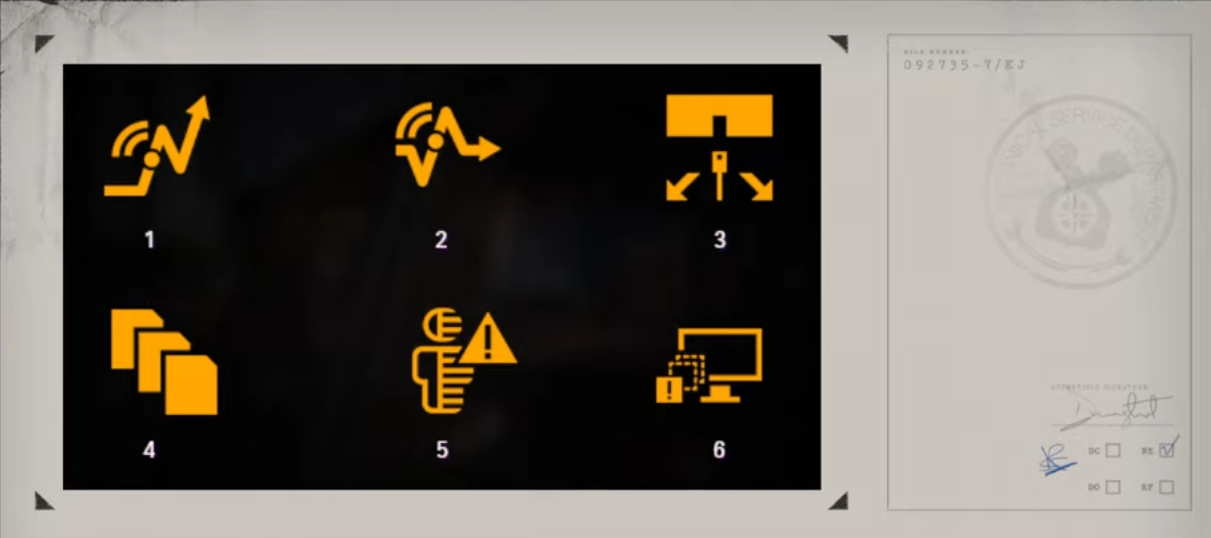
Network Alert Icons
In the Multiplayer Beta, Black Ops Cold War features optional In-Game Alert Icons which can be toggled to display when your connection to the game server is experiencing issues. These are important as they tell the player exactly what the cause of their connection issues are.
High Latency
Affecting your internet speed. Make sure there aren't other running programs or any active downloads.
- Orange: Round trip latency exceeds 100ms
- Red: Round trip latency exceeds 150ms
Latency Variation
Directly connect your system to the router to prevent variation in your connection and being out of sync with the gamer server.
Disconnected
Lost connection to the game server. Check your internet connection.
Packet Burst
Connection issue often caused by network congestion or a CPU bottleneck. Check your internet connection and try to lower your graphic settings.
Extrapolation
Client and server are out of sync, try rebooting. If the issue persists, contact your network provider.
Shaders Compilation
Shaders are still compiling and can cause performance issues. Wait for the compilation to be done before entering a lobby.
Server and Client Send Rates
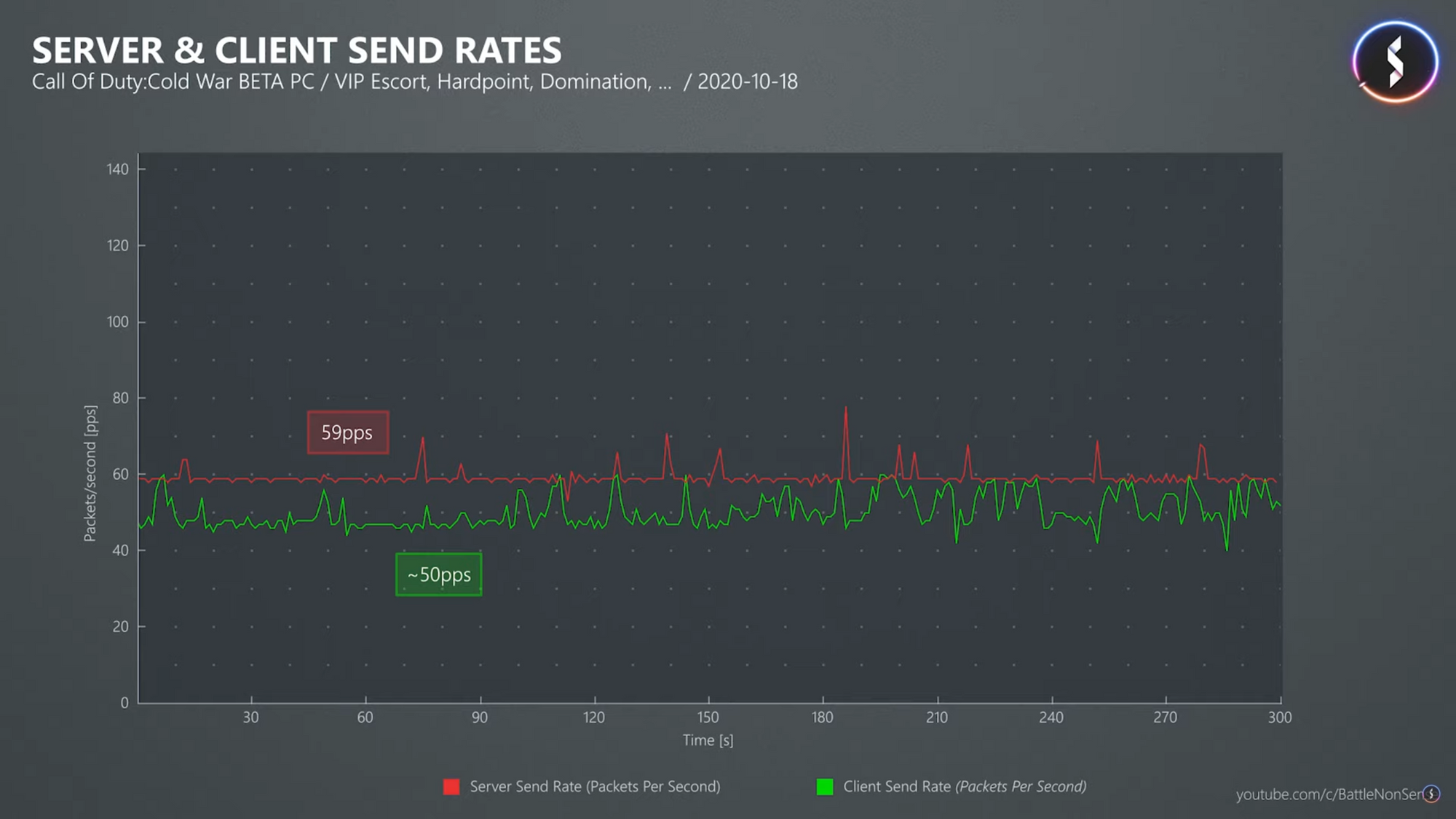
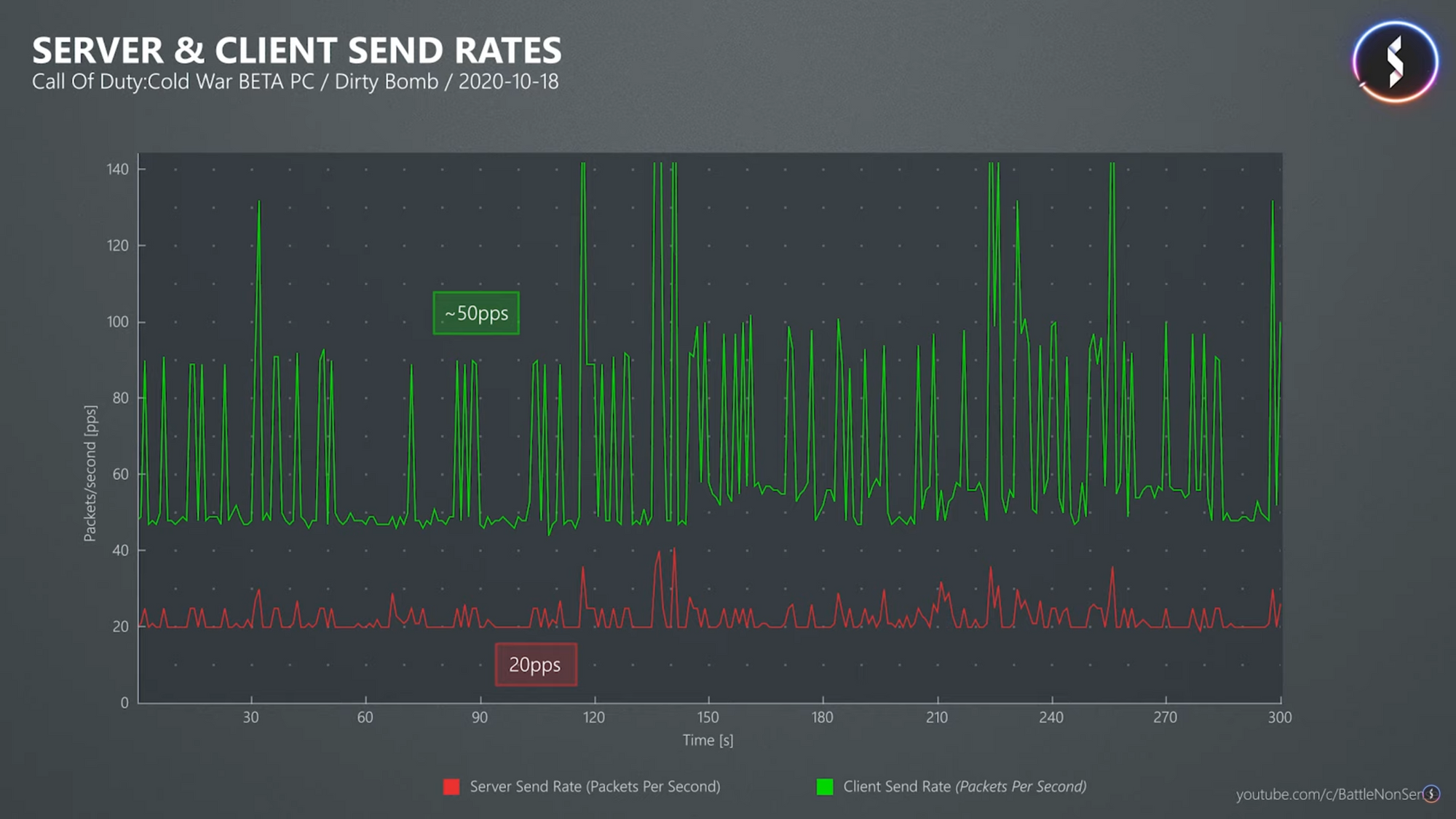
Server and client send rates measure the frequency in which the game state is updated on each respective instance. In this statistic, higher is better, as this means the game state is updated more often, resulting in a smoother and more synchronized experience.
Small Team Modes
In Multiplayer modes which feature the classic amount of players, such as Domination with 12 players, the online experience is more stable and appears to be targeting a simultaneous 60Hz send rate.
- Server Send Rate: ~59Hz
- Client Send Rate: ~50Hz
Large Team Modes
In Multiplayer modes which feature an above average amount of players, such as Fireteam with 40 players and Combined Arms with 24 players, the online experience suffers from unstable send rates from both the client and server. It's in these modes that we also see the server send rate decreased to 20Hz.
- Server Send Rate: ~20Hz
- Client Send Rate: ~50Hz
Network Delay
The end-to-end delay between two players is arguably the most important statistic to measure as, despite the send rates and quality of the connection, it is what the player realistically experiences.
In Battle(non)sense's Netcode Analysis, player to player damage, gunfire, and movement were tested. Across all modes, these results are the most worrying as Black Ops Cold War offers far from the experience that its competition provides.
Small Team Modes
In Multiplayer modes which feature the classic amount of players, such as Domination with 12 players, network delays rival those found in Call of Duty: Modern Warfare's Ground War mode, which features 64 players.
Compared to other modern shooter titles such as Valorant, Fortnite Battle Royale, and Rainbow Six Siege, these numbers are far from impressive.

Large Team Modes
In Multiplayer modes which feature an above average amount of players, such as Fireteam with 40 players and Combined Arms with 24 players, network delays are only worsened, with results nearly quadrupling those found in the previously compared titles.

Conclusion
In conclusion, Call of Duty: Black Ops Cold War has a solid foundation for the network experience given Activision's previous experience with prior titles. In modes with the normal amount of players, servers appear to be targeting the 60Hz standard but will need to see an improvement to at least match the delays found in similar titles.
As expected, modes which feature a large amount of players suffer from decreased network performance, making for a frustrating experience for fans of these modes.
Activision and Treyarch have yet to comment on player concerns regarding the online experience. We can only hope that the full release on November 13th will see improvements across the board.
Stay tuned to @CODTracker on Twitter for full Call of Duty coverage, including the latest Black Ops Cold War news. In case you're new here, we also offer Player Stats, Leaderboards, and a Cosmetics Database for the latest titles - check us out!
,fit(cover),quality(80)/https%3A%2F%2Ftrackercdn.com%2Fghost%2Fimages%2F2022%2F1%2F311248_AGB-COD-STATUS-REPORT-TOUT.jpg/image.jpg)
,fit(cover),quality(80)/https%3A%2F%2Ftrackercdn.com%2Fghost%2Fimages%2F2022%2F1%2F311232_XBOX_LUNAR_SALE_COD.png/image.jpg)
,fit(cover),quality(80)/https%3A%2F%2Ftrackercdn.com%2Fghost%2Fimages%2F2022%2F1%2F28647_BATTLENET_LUNAR_SALE_COD.png/image.jpg)
,fit(cover),quality(80)/https%3A%2F%2Ftrackercdn.com%2Fghost%2Fimages%2F2021%2F12%2F23523_PLAYSTATION_CALL_OF_DUTY_HOLIDAY_SALE.png/image.jpg)
,fit(cover),quality(80)/https%3A%2F%2Ftrackercdn.com%2Fghost%2Fimages%2F2021%2F12%2F23357_VGD-S1-ANNOUNCEMENT-002.jpg/image.jpg)